Hummus Bodega
Israeli street food · restaurant & food truck · San Francisco Bay Area
Results
The marketing site uses Google Analytics 4 on the owned domain. The brand also ran Google Ads with a funnel to DoorDash ordering for the food truck. The metrics and charts below are client reported sales and Ads conversion data, not modeled or inferred from this codebase.
Food truck sales rose period over period while Ads sent qualified traffic to the DoorDash destination. The client allocated $400 in ad spend; conversion tracked spend (397 DoorDash landing page conversions × $0.79 cost per conversion) totals $313.63, which we use for incremental ROAS against the sales lift below.
Sales lift
+$1,143.50
vs prior period
Period growth
45%
food truck sales
Incremental ROAS
3.64×
on tracked spend
Cost per conversion
$0.79
397 to DoorDash
Food truck sales by window
Compared periods: Jan 15 to Feb 15 = $2,545.30 · Feb 15 to Mar 12 = $3,688.80 · Net change +$1,143.50 (~45% higher than the prior window).
Incremental return on ad spend
3.64× ROAS
$313.63 in conversion tracked spend → $1,143.50 incremental sales vs the previous month.
Funnel: Ads to DoorDash
Clicks to the DoorDash destination counted as conversions in Google Ads.
Project overview
Hummus Bodega is an Israeli street food brand in the Bay Area with a brick and mortar restaurant and a food truck. The work encompassed a fast, static marketing front door and a separate authenticated operations app tied to a shared Supabase backend: one system for guests and discovery, another for menu CMS, hours, catering, reviews, and email-adjacent workflows.
Client
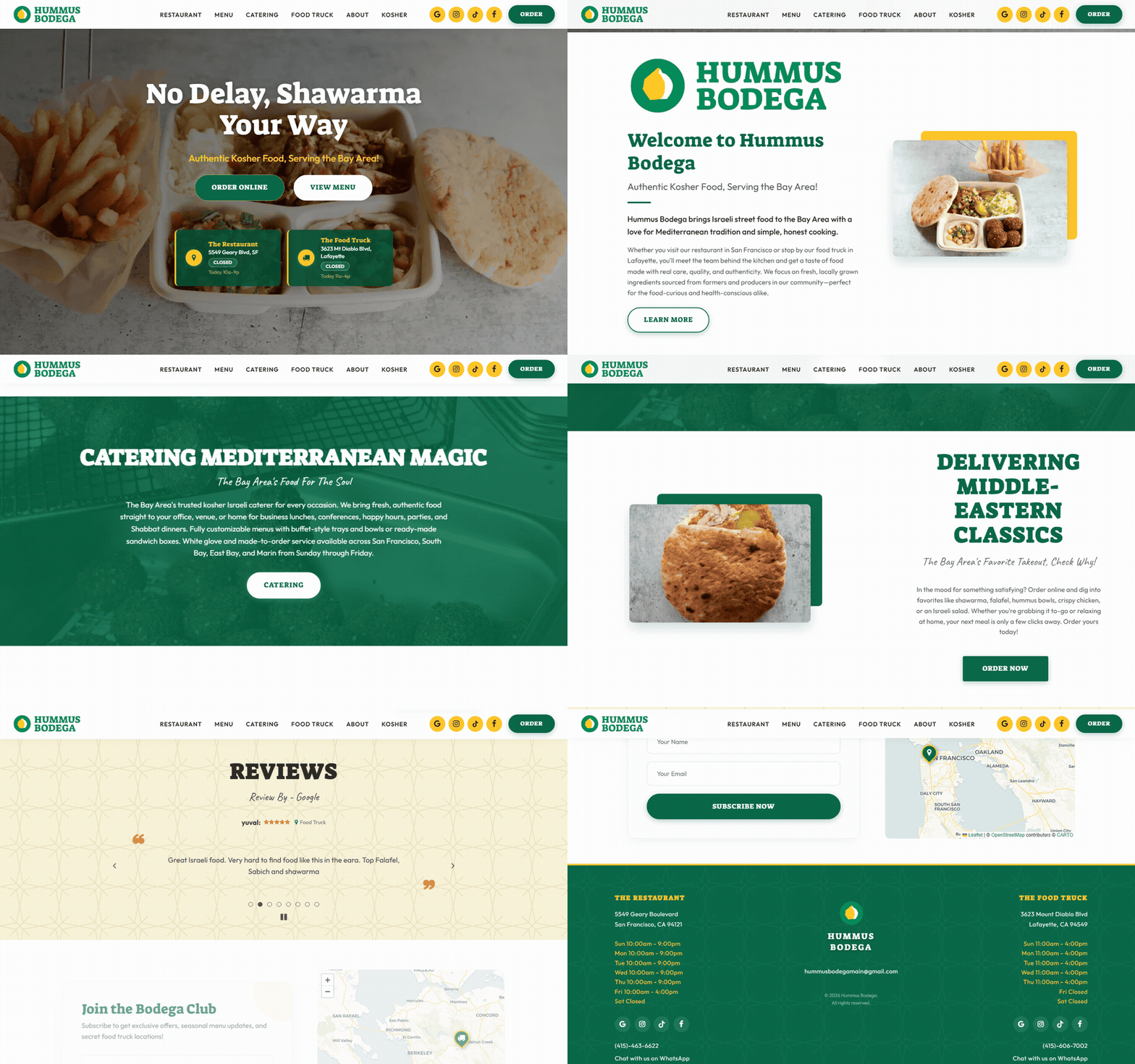
The brand presents authentic Israeli street food and Mediterranean classics (hummus, shawarma, falafel, and related menu items) with a public site that routes standard orders through Toast, highlights catering, kosher information, story, and food truck locations, and links out to social channels. Ingredients are positioned as fresh and locally sourced on the public site.
Challenge
Hospitality brands often juggle fragmented updates: hours and menu copy drift across pages, catering is treated as a form instead of a workflow, and reputation lives in multiple places. The goal was a coherent digital layer that stays fast for visitors while giving operators a single place to manage content, time sensitive information, and customer facing flows.
Solution overview
The public experience is built as static HTML, CSS, and vanilla JavaScript (no SPA on the marketing surface) with intentional UX touches (smooth scrolling, scroll reveals, maps where relevant) and hosting configured for clean URLs. A Next.js (App Router) admin application provides authenticated access to REST APIs for menu, hours, catering, analytics checks, email related features, and more, backed by Supabase (PostgreSQL, auth, and storage for menu imagery).
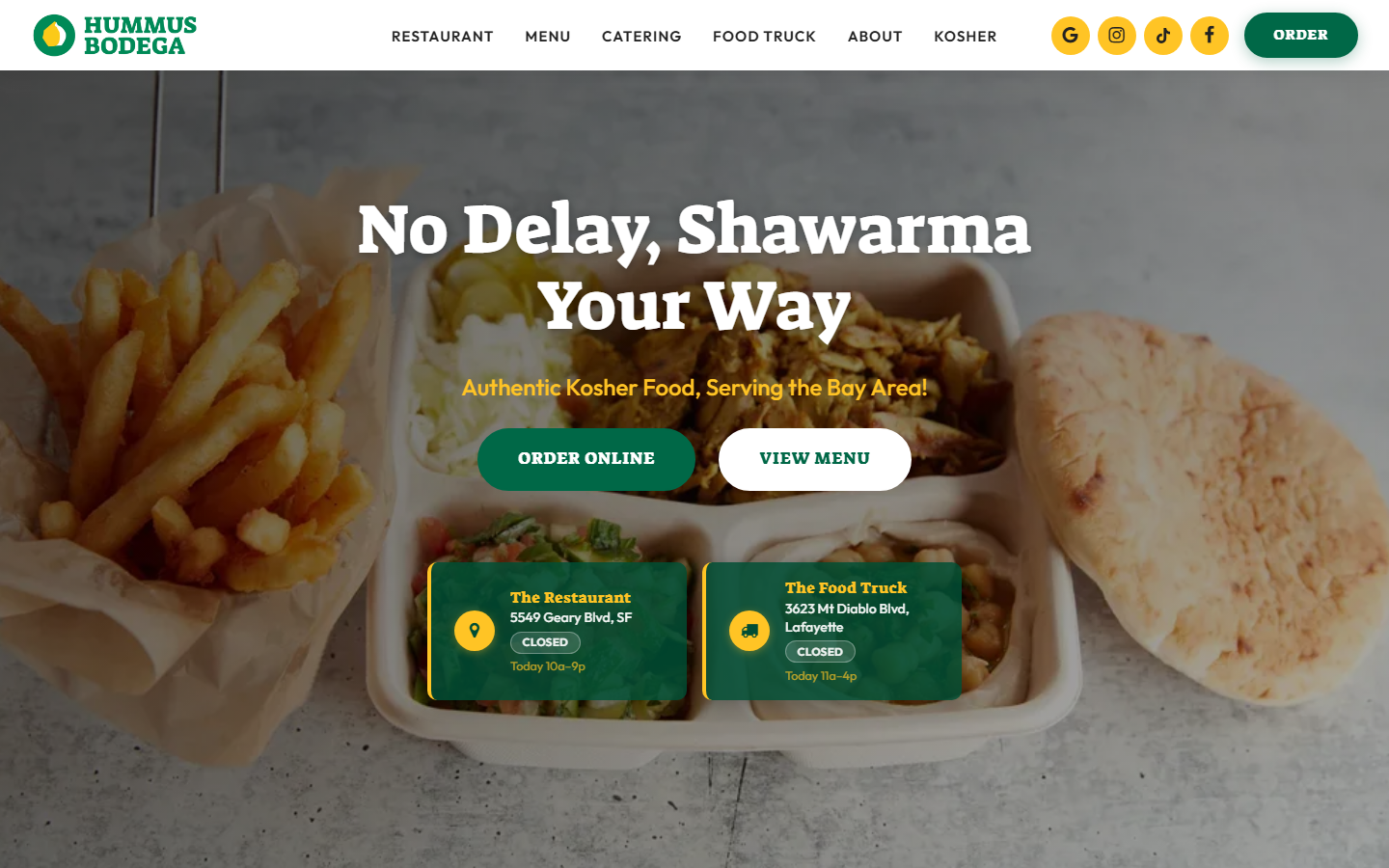
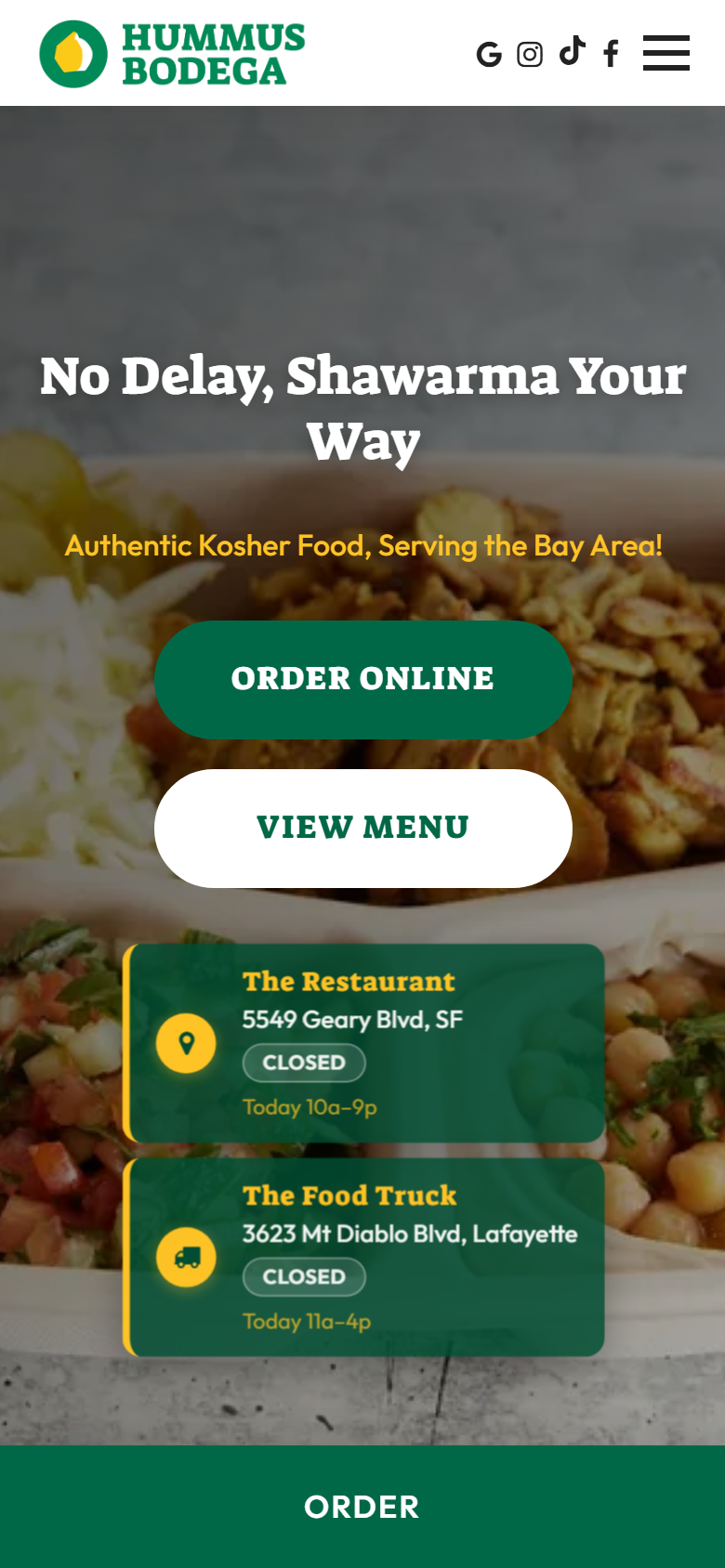
Hours for the restaurant and food truck are loaded from a single API, driving hero “open or closed” cues and footer blocks so the site does not rely on hand edited duplicates. The food menu is served from the same API when available, with a path to legacy embedded data as a fallback. Catering is implemented as a substantial client side flow (guest ordering, accounts, order history, admin facing pipeline concepts) with optional alignment to Toast and configurable hooks such as an AI proposal endpoint, described as optional assistance, not as full automation of the business.
The dashboard supports reviews management, newsletter signups tied to page context, and lightweight CRM style contacts, plus email integrations (for example Resend and inbound processing) suited to transactional and conversational use alongside orders.
Technical highlights
- Static marketing site with performance minded choices (for example hero image preload on key pages).
- Next.js admin with middleware backed sessions; Supabase Auth for protected routes in production.
- API first menu and hours; optional POS alignment via Toast related sync routes and imports.
- Supabase Storage for menu images; GA4 oriented measurement (gtag) on main marketing pages.
Beyond Ads, the underlying platform still supports consistent hours and menu presentation, catering workflows, and centralized operations on one stack.
Stack
| Layer | Technologies |
|---|---|
| Public site | HTML, CSS, vanilla JavaScript · Vercel style URL rules |
| Admin, APIs | Next.js, React, TypeScript, Tailwind CSS |
| Data & auth | Supabase (PostgreSQL, Auth, Storage) |
| Integrations | Toast (ordering, POS alignment), Resend, Google Analytics |
Public site